Diamonds — Kimberley, the Northern Cape, and Cullinan
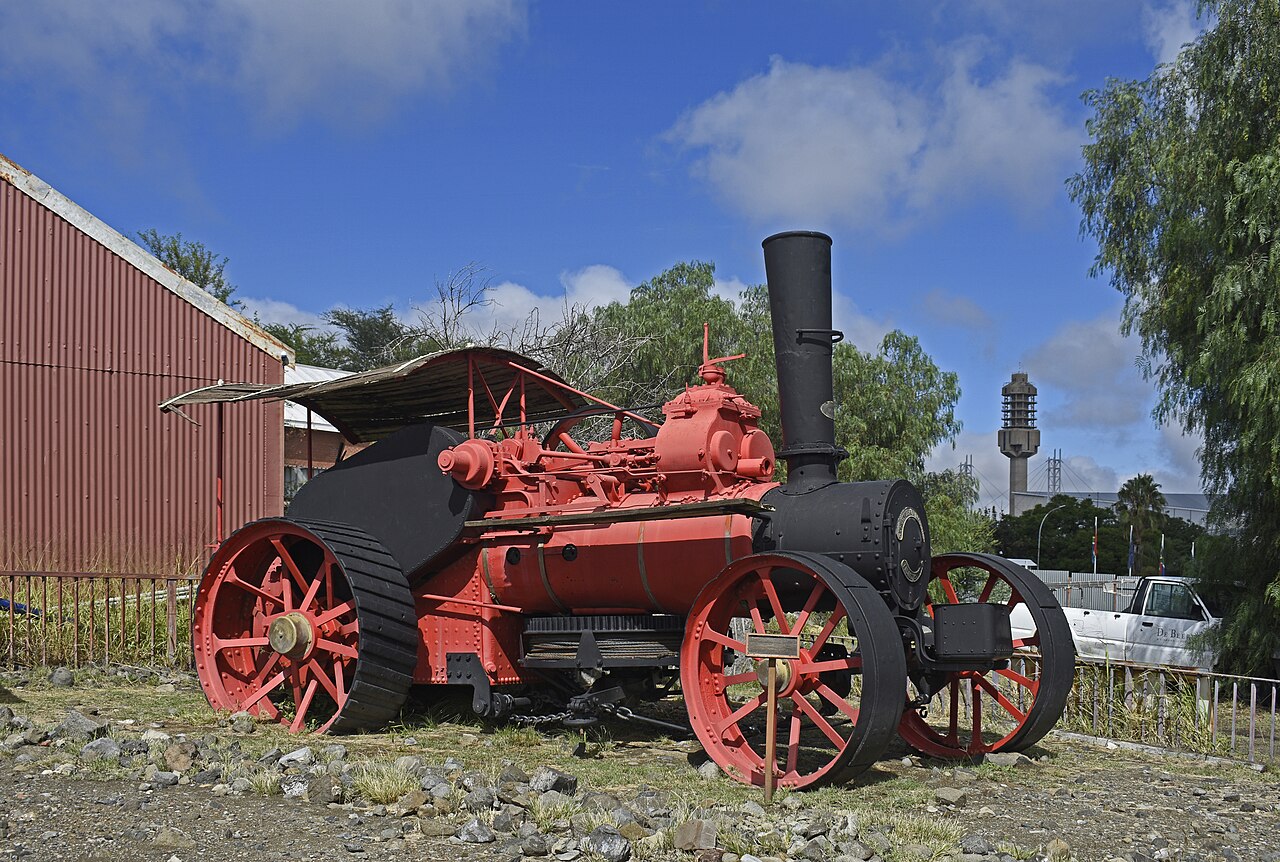
Where. South Africa's diamond story began at Kimberley in the Northern Cape, where diamonds were found in the 1860s and 1870s. The famous Big Hole at Kimberley — among the largest holes ever dug by hand — was worked from 1871 to 1914 and yielded about 14.5 million carats. East of Pretoria, the Cullinan mine in Gauteng gave the world the largest gem diamond ever found: the Cullinan Diamond of 1905, weighing 3,106 carats in the rough. Diamonds are also recovered from river gravels — alluvial fields along the Orange and Vaal rivers.
How they are mined. Diamonds sleep in kimberlite — a volcanic rock that carried them up from deep in the earth in carrot-shaped pipes. A diamond mine begins as an open pit, following the pipe down; as the pit deepens, the work goes underground, with tunnels around and beneath the pipe. The broken rock is trucked to a plant, crushed and washed; because diamond is far heavier than most rock, a dense liquid separates the heavy concentrate, and X-ray sorters pick out the diamonds, which glow under X-rays. Alluvial diamonds need no crushing — the river has done the work — and are won by screening and washing gravel.
Gold — the Witwatersrand
Where. The Witwatersrand basin around Johannesburg in Gauteng, discovered in 1886, is the largest known gold field on earth; gold is also mined in the Free State.
How it is mined. The gold lies in thin seams of conglomerate rock called reefs, dipping deep underground. The Witwatersrand mines are among the deepest on earth — workings reach nearly four kilometres down. Miners descend by shaft, drill and blast the narrow reef, and the broken ore is hoisted to the surface, milled to powder, and the gold drawn out and refined into bars.
Platinum — the Bushveld Complex
Where. The Bushveld Complex — a great saucer of ancient volcanic rock across Limpopo, North West and Mpumalanga — holds most of the world's platinum.
How it is mined. Platinum lies in two thin, rich seams, the Merensky Reef and the UG2. Mines follow these seams underground, much like the gold mines. On surface, the ore is crushed and ground, then floated in water with air bubbles — the valuable minerals ride the froth — and the concentrate is smelted and refined into platinum, palladium, rhodium and other metals of the same family.
Coal — Mpumalanga
Where. Most of South Africa's coal comes from the highveld of Mpumalanga, with further fields in KwaZulu-Natal and Limpopo.
How it is mined. Where the seams lie shallow, coal is won by open-cast mining: great draglines and fleets of trucks and shovels strip the soil and rock above the seam, take the coal, and restore the land behind them. Underground, the bord-and-pillar method leaves pillars of coal standing to hold the roof while the rest is cut away. The coal is washed and graded before it travels, much of it to the country's power stations.
Iron Ore and Manganese — the Northern Cape
Where. Around Kathu and Sishen in the Northern Cape stand great iron ore mines, and nearby lies the Kalahari Manganese Field — the largest known land-based manganese deposit on earth.
How they are mined. Both are open-pit mines: the pit is worked in steps called benches, drilled, blasted, and loaded by large shovels into large trucks. The ore is crushed and screened, then railed on a dedicated heavy-haul line to the port of Saldanha Bay for export, or supplied to the country's own steel works.
The other minerals, in brief
Copper — mined at Palaborwa in Limpopo, in a great open pit, and refined for the country's electrical industry. Chromium and vanadium — from seams of the Bushveld Complex, mined underground and in open pits. Nickel — won mainly as a companion metal of the platinum mines. Titanium — recovered from heavy mineral sands along the coasts, by dredging and separating the sands. Zinc and silver — from base-metal mines of the Northern Cape, such as Gamsberg. Uranium — recovered mainly as a by-product of Witwatersrand gold mining. Phosphate — mined at Phalaborwa and made into fertiliser. Vermiculite — from the same Phalaborwa complex; it swells when heated and serves in insulation and growing. Andalusite — mined in Limpopo and Mpumalanga for furnace linings. Fluorspar — from mines near Zeerust in the North West. Antimony — from the Murchison range in Limpopo, long mined with gold.
The minerals ranked by usefulness to mankind
- Coal — Power and electricity for homes, schools and industry
- Iron Ore — Steel for buildings, bridges, railways and machines
- Gold — Money, electronics, dentistry and medicine
- Platinum — Cleaner air, jewellery and hydrogen fuel cells
- Diamonds — Jewellery, and cutting and drilling tools for industry
- Copper — Electricity in every home and machine
- Manganese — Strong steel for construction and transport
- Chromium — Stainless steel that does not rust
- Phosphate — Fertiliser — food for mankind
- Uranium — Low-carbon electricity
- Nickel — Stainless steel and batteries
- Zinc — Rust protection and health
- Vanadium — Strong steel and energy storage
- Titanium — Aircraft, ships and medical implants
- Silver — Electronics, solar panels and medicine
- Fluorspar — Steel, aluminium and refrigeration
- Andalusite — Furnace linings for heavy industry
- Vermiculite — Insulation, fire safety and gardens
- Antimony — Fire safety and batteries
Mineral photographs on this platform are shared by Wikimedia Commons contributors under Creative Commons licences; the portrait of the Managing Director was supplied by the company.